


Industrial mechanical parts made from ordinary casting materials often appear stable and reliable on the surface, yet they trigger frequent hidden faults during long-term high-load operation. Many manufacturing enterprises spend huge costs on maintenance, replacement and downtime losses, but fail to find the root cause of repeated failures. Most problems do not stem from improper operation, but from unreasonable material selection, inaccurate dimensional tolerance and unstable casting structure. Choosing qualified aluminum alloy die casting components can fundamentally avoid these chronic industry pain points and greatly extend the overall service life of mechanical equipment.
Poor-quality die casting parts commonly suffer from porosity, shrinkage cavities and internal air bubbles that cannot be detected by surface inspection. These tiny defects will gradually expand under high temperature, vibration and pressure, leading to oil leakage, air leakage, structural cracking and sudden equipment shutdown. Conventional inspection methods cannot identify internal micro-defects in advance, resulting in unexpected production accidents that disrupt the entire assembly line schedule. Professional customized die casting solutions strictly control every melting and molding process, eliminating internal hidden dangers from the source of material forming.
Long-term exposure to humid, corrosive and outdoor harsh environments accelerates aging and corrosion of ordinary metal castings. Rust, wear and deformation directly reduce assembly accuracy and transmission stability, lowering product qualification rate and increasing scrap rate year by year. Lightweight and corrosion-resistant aluminum alloy materials own natural advantages in anti-oxidation and anti-corrosion performance, adapting to automobile, machinery, electromechanical and intelligent equipment scenarios that require stable precision for years. Reliable supply partners like Viaol Industrial implement standardized surface treatment processes to further enhance weather resistance and wear resistance of finished products.
Many buyers only focus on unit price when purchasing die casting parts, ignoring matching precision, assembly compatibility and batch consistency. Low-cost rough castings have large dimensional deviations, requiring repeated secondary processing and polishing, which wastes labor hours and delays delivery cycles seriously. Mass customized precision die casting adopts integrated molding technology, ensuring uniform size tolerance of each batch of products, seamless assembly with matching accessories, and no extra post-processing cost. It effectively optimizes enterprise production efficiency and reduces overall comprehensive procurement cost.
Temperature change deformation is another deep-seated problem easily overlooked by mechanical equipment supporting parts. Under continuous high-speed operation, metal temperature rises sharply, and materials with unstable thermal stability will shrink or expand abnormally. This causes position deviation, clamping looseness and abnormal noise of mechanical structures, damaging core precision accessories step by step. High-density aluminum alloy die casting owns excellent thermal stability and lightweight rigidity balance, maintaining stable dimensional accuracy in wide temperature ranges and protecting the stable operation of core mechanical systems.
Performance Comparison of Common Die Casting Material Types
| Material Type | Corrosion Resistance | High Temperature Stability | Weight Characteristic | Processing Precision | Service Life | Main Application Limitations |
|---|---|---|---|---|---|---|
| Ordinary Iron Casting | Poor | Average | Heavy | Low tolerance accuracy | Short | Easy to rust, large inertia, unsuitable for high-speed precision equipment |
| Zinc Alloy Die Casting | Medium | Weak | Medium | General precision | Medium | Easy deformation at high temperature, poor fatigue resistance |
| Ordinary Aluminum Alloy | Good | Medium | Lightweight | Standard precision | Long | Uneven internal structure, easy hidden pore defects |
| High-Precision Aluminum Alloy Die Casting | Excellent | Outstanding | Ultra-light & high rigidity | Ultra-high dimensional tolerance | Extra long | Almost no obvious scene limitations |
Hidden quality problems of die casting parts will spread faults to the whole equipment system. Loose internal structure causes fatigue fracture after long vibration, unsmooth surface finish increases friction loss of transmission parts, and unqualified tightness damages sealing matching components. These chain reactions bring continuous hidden troubles to automated production lines, automatic mechanical equipment and automotive precision assemblies. Systematic precision die casting production adopts vacuum die casting, pressure stabilization molding and full-process quality testing, ensuring each finished part meets industrial-grade safety and durability standards.
Batch stability directly determines the continuity of mass assembly production. Irregular quality differences between different batches will lead to inconsistent assembly effects, frequent debugging failures and unstable finished product performance. Professional manufacturers implement full-dimensional inspection before delivery, including hardness testing, air tightness testing, dimensional detection and appearance flaw screening. Every aluminum alloy die casting product leaves the factory only after passing multi-item strict verification, fully meeting large-scale continuous assembly and long-cycle stable use requirements.
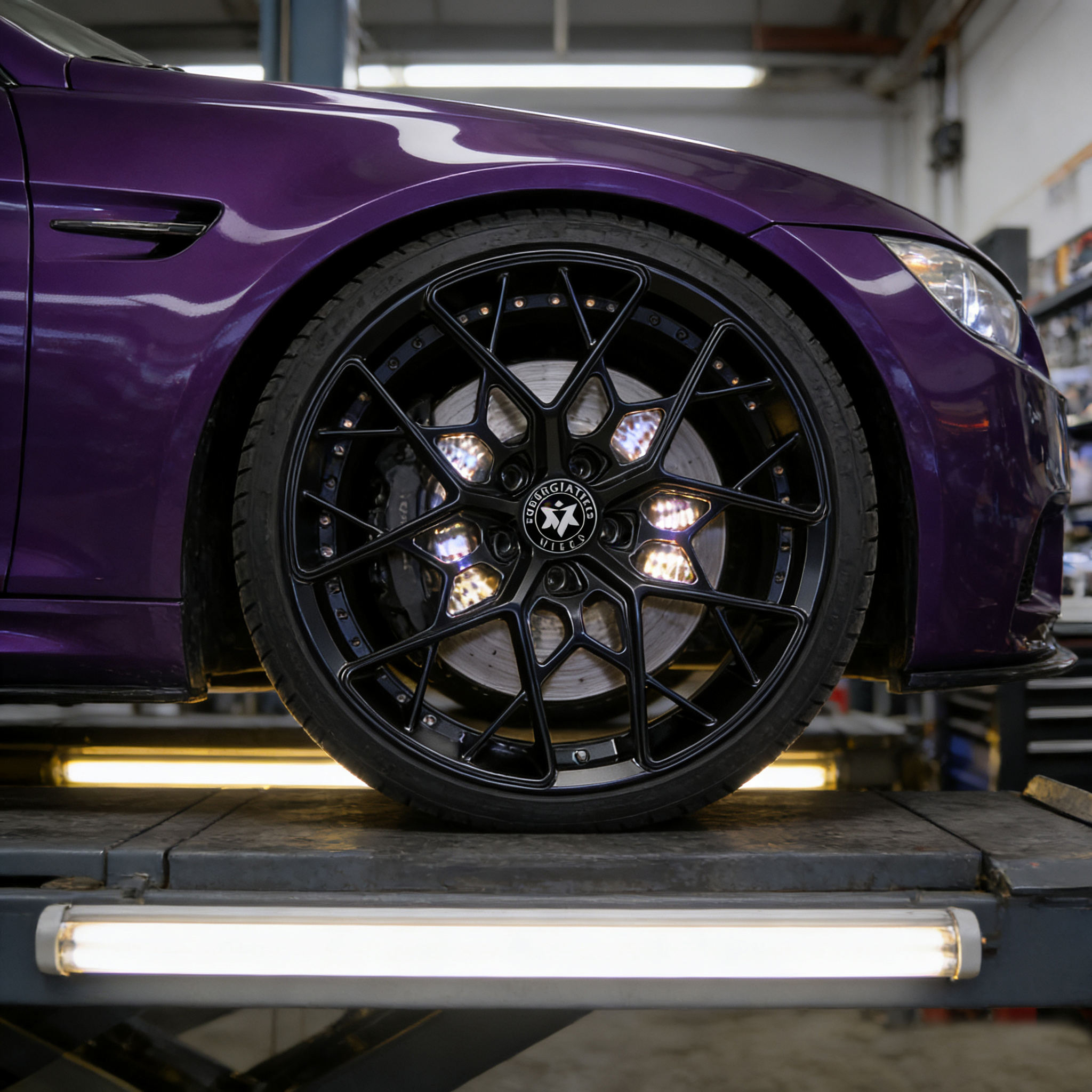
In practical industrial application scenarios, lightweight precision die casting also helps energy saving and consumption reduction of mechanical equipment. Light body reduces overall load of mechanical operation, lowers power consumption, slows down wear of bearing and shaft parts, and prolongs maintenance cycle of the whole machine. Compared with traditional heavy metal parts, customized aluminum alloy die casting achieves perfect balance between structural strength and lightweight effect, which conforms to the upgrading trend of modern intelligent manufacturing, energy-saving equipment and lightweight automotive industry.
To sum up, selecting professional high-precision aluminum alloy die casting parts is not just a simple component purchase behavior, but a key strategy to control production risks, reduce later maintenance costs and improve overall product quality. Avoiding superficial selection logic, attaching importance to internal material quality, molding process and long-term service performance, can thoroughly solve various hidden troubles that plague mechanical production operation, and bring sustainable stable benefits to enterprise long-term production layout.